
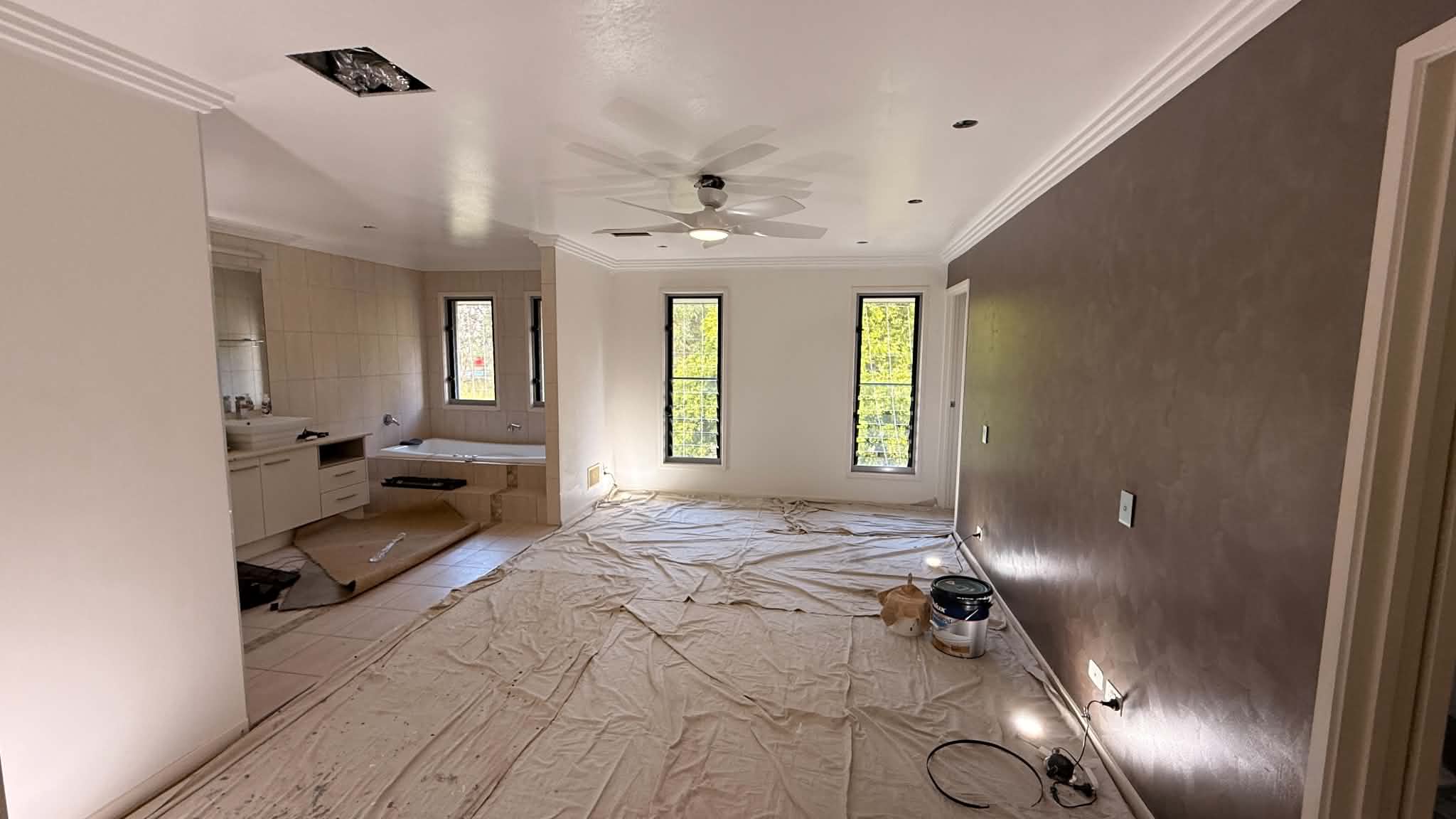
Selecting the right paint sheen level is just as critical as choosing the color palette. Sheen affects not only how light bounces across a room, but also how well the painted surface resists scuffs, moisture, and frequent scrubbing.
Specifying the wrong sheen in the wrong area leads to visible plaster imperfections or walls that stain the moment you attempt to clean them. Here is our master trade breakdown of interior paint sheens.
Flat and Matte Finishes for Ceilings
Ceilings receive zero direct foot traffic or hand contact, but they are illuminated by raking light from windows and downlights.
- Light Reflectance: Zero to 5 percent sheen.
- Where to Use: All standard plasterboard ceilings, cornices, and decorative ceiling roses.
- Key Advantage: Flat paint diffuses light evenly across the ceiling plane, hiding taped plaster joints, minor sheet sagging, and surface variations.
- Trade Note: Never apply low-sheen or gloss paint to a plasterboard ceiling unless it is a moisture-heavy bathroom, as higher sheens will highlight every tape joint.
Low-Sheen Acrylic for Living Areas and Bedrooms
Low-sheen acrylic is the standard workhorse for general residential interior walls.
- Light Reflectance: 10 to 15 percent sheen.
- Where to Use: Master bedrooms, living rooms, dining spaces, open-plan family zones, and entrance hallways.
- Key Advantage: Premium formulations like Dulux Wash and Wear provide a soft, velvety appearance while allowing finger marks, food splashes, and crayon marks to wipe off with a damp microfibre cloth.
- Trade Note: Ensure two uniform coats are rolled wet-on-wet with consistent roller direction to avoid flashing or roller tracking marks.
Semi-Gloss and Satin Enamels for Doors and Trims
Woodwork, door leaves, and skirting boards take the brunt of daily domestic wear from vacuum cleaners, shoes, and pets.
- Light Reflectance: 40 to 60 percent sheen.
- Where to Use: Skirting boards, architraves, timber window sills, internal door faces, and handrails.
- Key Advantage: The harder resin structure in water-based acrylic enamel resists chipping, blocking (doors sticking to frames), and dark scuff marks.
- Trade Note: Traditional oil-based enamels tend to yellow over time in rooms with low natural light. We specify modern non-yellowing water-based acrylic enamels.
Specialty Finishes for VJ Panelling
Vertical joint (VJ) timber panelling is a popular architectural feature in modern Queensland renovations. Because of the distinct groove profiles, light catches the vertical lines strongly.
- Recommended Sheen: Low-sheen for living room feature walls to maintain subtle elegance, or satin enamel for hallway wainscoting where school bags and hands frequently brush the boards.
- Application Tip: Spraying VJ panelling produces an immaculate groove fill, but when hand-rolling, a small microfibre mini-roller must be paired with immediate brush tipping down each vertical recess.